Drawing on my experience supporting faculty as a Digital Learning Teacher and now in higher education, I’ve continually sought ways to help educators adopt meaningful technology in their practice. This course deepened that motivation by encouraging me to design a professional learning program that centers on AI tools in education, with the goal of growing into the role of an Instructional Technologist.
For this project, I collaborated with Colleague AI to design a professional learning lesson plan focused on AI and course integration. I used the Backward Design framework (UbD) to guide the process, starting with the learning outcomes I wanted educators to walk away with.
The goal was to help educators better understand how to thoughtfully and ethically integrate AI tools into their teaching. I aligned the lesson with the ISTE Standards for Educators and UNESCO’s AI in Education framework, making sure the focus remained on both strong pedagogy and a human-centered approach to technology use.
Topic & Standards
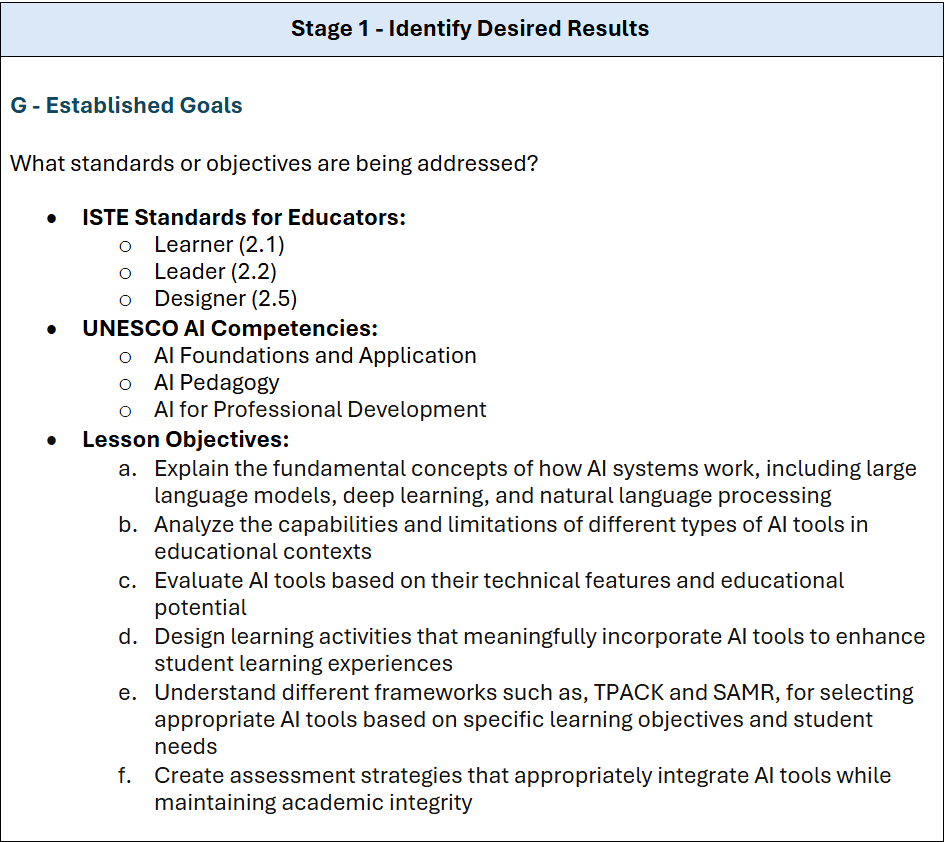
My design was grounded in the ISTE Standards for Educators—particularly:
2.1 Learner: Actively learning to improve practice and explore innovative applications of technology.
2.2 Leader: Advocating for equitable access and modeling lifelong learning.
2.5 Designer: Designing authentic, learner-driven experiences supported by technology.
I also integrated guidance from UNESCO’s AI in Education framework, particularly the domains of AI Foundations and Application, AI Pedagogy, and AI for Professional Development. These standards emphasized a human-centered, pedagogically grounded approach to integrating AI into learning environments.
Desired Results & Assessment
By the end of the program, educators should be able to:
Understand the foundations of AI, including how AI and large language models (LLMs) work.
Apply AI integration principles within lesson planning.
Evaluate AI tools for pedagogical alignment using TPACK and SAMR frameworks.
Maintain a human-centered approach that balances innovation with ethical responsibility.
To assess their learning, participants will:
Build a professional portfolio with annotated lesson plans that demonstrate purposeful tool selection.
Provide rationales for tool use that reflect pedagogy, content, and context.
Submit documentation of tool use, including classroom impact, student engagement, and changes to instructional practice.
Reflect weekly through journals and create a growth plan outlining future learning goals.
Present their learning in Professional Learning Community (PLC) sessions to extend knowledge sharing.
Learning Plan & Tech Integration
The program spans 6 weeks, meeting three times per week, with each week scaffolding knowledge and hands-on experience:
Week 1: Introduces AI literacy and integration frameworks like TPACK and SAMR.
Week 2: Focuses on ChatGPT and LLMs, emphasizing prompt design and ethical classroom uses.
Week 3: Guides lesson planning using Khanmigo, Gamma AI, and Colleague AI to explore AI-assisted content generation.
Week 4–5: Participants choose an AI tool and implement it through both TPACK and SAMR lenses, receiving feedback along the way.
Week 6: Final portfolios are submitted, and educators present key learnings through PLC presentations to model knowledge sharing.
Throughout, digital tools are not just explored—they are integrated into teaching design and evaluated based on their impact, relevance, and ethical use.
Reflection
This design process really made me appreciate how important it is to be intentional and structured when designing learning experiences, especially when working with evolving tools like AI. Using Colleague AI gave me a lot of creative possibilities, but at times I felt overwhelmed by the amount of choices. Next time, I would come in with more clarity, some specific goals or constraints, to help guide the brainstorming and keep things focused.
One thing that worked really well was the way the lesson built from foundational concepts into practical application. It helped me think more about how to scaffold learning in a way that is both meaningful and flexible. I also saw just how valuable it is to include reflection and peer sharing in professional learning, as it is what helps ideas stick and gives educators space to grow together.
Overall, this project made me feel more prepared and confident as I move toward a future in instructional technology. It took more planning than some of the work I have done before, but it also confirmed that this is the kind of work I want to keep doing—supporting educators in using technology thoughtfully, ethically, and with real impact. It reminded me that digital leadership is not just about the tools. It is about helping others design lasting, transformative learning experiences.
With the rapid advancement of digital tools and AI technologies, educators and instructional designers now have more powerful resources than ever to collect, analyze, and act on learning data with precision and speed.
For instructional designers, this opens up new possibilities for understanding how learners engage with content and how courses can be improved. In a previous article, I explored MOOCs and online learning, highlighting how instructional design might help address low completion rates. But as Loizzo (2015) notes, completion rates alone may not offer the clearest picture of learner success, especially when students have varying motivations and goals. So if completion rates aren’t the most useful metric on their own, what data points should instructional designers be paying attention to? And how can AI support instruction designers in identifying and applying that data meaningfully?
AI tools are reshaping instructional design by streamlining data analysis and enabling more personalized, scalable, and informed course development. When applied thoughtfully, AI can uncover patterns that might otherwise go unnoticed, support data-driven decision-making, and enhance learning outcomes. At the same time, these opportunities come with important challenges, including concerns around ethics, bias, and ensuring that implementation remains grounded in human-centered and intentional design.
The Intersection of AI, Data, and Instructional Design
Educational Data Mining and Learning Analytics
Educational data mining (EDM) and learning analytics (LA) give instructional designers deeper insight into student engagement and success. Completion rates alone don’t reflect the full picture. By examining factors like course activity, demographic trends, feedback, and content usage, Designers can better understand learner behavior and identify which students are at-risk and where support is most needed (West et al., 2018).
For more evidence of valuable data points, institutions like the University of Phoenix collect and combine a wide range of information, including grades, discussion posts, tech support tickets, and application records (West et al., 2018). Integrating these data sources enables the creation of predictive models that support student persistence and guide course improvements.
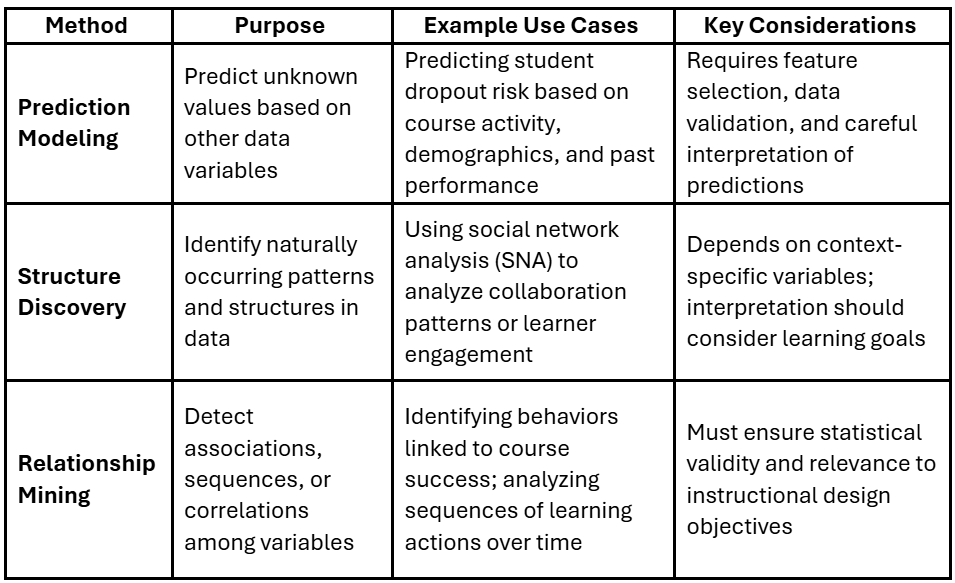
To manage this scale of data, distillation processes are used to reduce larger datasets into more manageable forms, while maintaining key patterns (Kang et al., 2024). Once data has been distilled, various analytical techniques in EDM/LA can be applied. These techniques are typically categorized into three core methods. Table 1 summarizes these methods as outlined by West et al. (2018).
Table 1: Overview of Educational Data Mining & Learning Analytics Methods (West et al., 2018)
These methods help instructional designers move beyond surface-level metrics and toward deeper insights that directly inform course development and student support strategies. However, they can be time-consuming and costly to implement—creating opportunities for AI to enhance and streamline the process.
How AI Enables Data-Informed Decision Making (DIDM)
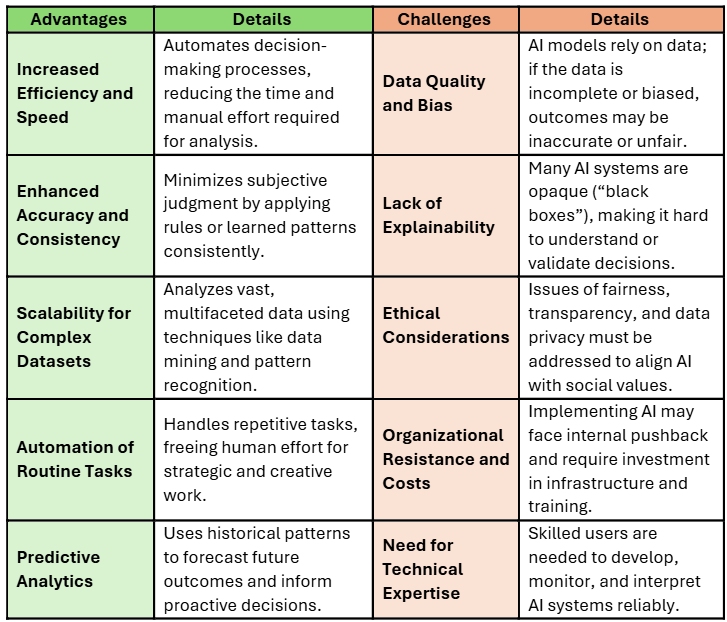
AI plays an increasingly central role in data-informed decision making (DIDM) by enabling faster, more accurate, and scalable analysis of large datasets. These technologies can streamline workflows, improve predictions, and uncover patterns that might otherwise go unnoticed. However, they also introduce new challenges related to bias, explainability, and implementation barriers. As instructional designers adopt AI, it’s essential to weigh both the benefits and limitations to ensure responsible and ethical use. Table 2 highlights these advantages and challenges, based on Balbaa and Abdurashidova’s (2024) research.
Table 2: Advantages and Challenges of AI in Decision Making (Balbaa & Abdurashidova, 2024)
AI’s Impact on Instructional Design Roles and Practices
Ethical Use of AI in Instructional Design
As AI tools become more embedded in instructional design practices, it’s critical to consider their ethical use. UNESCO emphasizes a handful of guiding principles that should shape how designers adopt AI. These include transparency, equity, respect for human autonomy, prevention of harm, responsibility, and strong data governance (Miao & Cukurova, 2024). These values are particularly important when dealing with sensitive student data and designing learning environments that aim to support all learners.
One major concern is algorithmic bias, which happens when the data used to train AI systems contains historical or societal biases (Balbaa & Abdurashidova, 2024). This can lead to unfair or inaccurate outcomes, particularly for marginalized groups. For example, if training data focuses too heavily toward one demographic, AI-generated recommendations or decisions may unintentionally exclude others.
Privacy is another key issue. While longitudinal data can offer powerful insights into learning patterns and outcomes over time, gathering that much personal information also raises important ethical and legal concerns. Instructional designers must balance the benefits of data-driven insight with the need to follow data protection laws and respect learners’ digital rights (West et al., 2018).
Finally, many AI models operate like “black boxes,” meaning it’s not always clear how they’re making decisions (Balbaa & Abdurashidova, 2024). This lack of transparency can make it tough to build trust in the tools we’re using—and even harder to explain or defend their outcomes.
Human-AI Collaboration in Design Work
Another key principle in UNESCO’s AI compliance guidelines is the importance of taking a human-centered approach when integrating AI (Miao & Cukurova, 2024). In instructional design, this perspective helps ensure that AI tools support ethical responsibility and meaningful learning outcomes. While AI can analyze large datasets and surface patterns rapidly, it lacks the contextual awareness, empathy, and critical thinking that human designers provide. Keeping humans in the loop leads to learning experiences that are not only efficient, but also inclusive, pedagogically sound, and aligned with learner needs.
With human oversight in mind, a structured review process helps uphold both quality and ethical standards. For example, when designing AI-assisted simulations for a health sciences course, a designer might:
Review for factual accuracy and relevance
Review for alignment with pedagogical goals and cognitive load
Review for inclusive language, tone, and accessibility
This iterative process reflects UNESCO’s emphasis on human-centered AI—where technology supports and enhances human decision-making, promoting efficiency, quality, and accuracy.
For more on this collaborative framework, see my article on the HAIH model (Human-AI-Human), which outlines practical strategies for integrating AI thoughtfully throughout any design process such as goal setting.
AI in Automating Routine Tasks
AI’s most immediate impact on instructional design is in automating repetitive or time-intensive tasks, giving designers more space for creative and strategic thinking (Ch’ng, 2023). Tasks like aligning learning objectives, organizing course content, or drafting initial assessment items can now be accelerated with AI tools.
When applied to the ADDIE model, AI plays a role across each phase:
Analysis
Traditionally, the analysis phase required significant time and effort, involving manual data collection through interviews, surveys, and reviewing historical learner data to develop accurate learner profiles (Ch’ng, 2023). AI changes this by streamlining data collection and interpretation. It can analyze complex datasets like LMS logs, survey responses, and performance trends much faster than a human could. This results in more accurate insights and reduces the burden on instructional designers.
Design & Development
AI tools enable designers to create text, images, audio, and video content quickly, even without deep technical skills. Voiceovers and auto-captioning make audio production more accessible, while visual and textual content can be generated on demand. The result is richer, more inclusive multimedia content created with less time and effort.
Implementation
AI-powered chatbots and asynchronous tools are becoming increasingly common in today’s courses. They provide learners with real-time feedback and support, which is especially valuable in online self-paced environments. Intelligent Tutoring Systems (ITS) take this further by personalizing instruction, helping learners navigate challenging concepts at their own pace and offering tailored guidance (Gibson, 2023).
Evaluation
AI supports both formative and summative assessment by offering features like automated grading, real-time feedback, and predictive modeling to identify at-risk students (Gibson, 2023). This enables instructors to intervene earlier and make adjustments as needed. Additionally, AI helps reveal patterns in learner behavior that can guide improvements in future course design
Reframing Instructional Design Work
As AI reduces the manual workload in areas like analysis and development, instructional designers have more space to focus on what really matters like improving the learner’s experience, advancing inclusive design, and thinking strategically. But to make the most of these tools, designers need access to professional learning environments that encourage exploration and build confidence. Without that support, it’s easy to miss out on the full potential of AI, and designers may hesitate to experiment or integrate it meaningfully into their practice.
Effective AI Tools and Strategies for Course Development
Overview of Instructional Design AI Tools
As AI becomes more integrated into educational technology, instructional designers have access to a growing suite of tools to support their work. Popular platforms like ChatGPT, Gemini, Claude, and Copilot are widely used because they’re easy to access, intuitive, and generally reliable for tasks like brainstorming, summarizing content, or drafting outlines. However, because these models are trained on broad and diverse datasets, they can sometimes generate “hallucinated” or inaccurate information that lacks context for instructional design.
For more targeted support, specialized AI tools designed for specific subjects, like education, offer greater value. These tools are often trained on instructional design principles and pedagogical frameworks, giving them a deeper understanding of concepts like learning progressions, cognitive load theory, instructional alignment, and scaffolding (Hardman, 2025). When integrated thoughtfully, they can help create more pedagogically sound learning experiences that are better aligned with course objectives and learner needs.
Supporting the Analyze Phase
AI can enhance traditional methods like surveys and interviews by streamlining and improving how data is gathered and interpreted:
SurveyMonkey – Helps instructors quickly create, distribute, and analyze surveys, gathering insights on learner needs and institutional goals (Hardman, 2024).
Descript or Fathom – Automatically transcribe and analyze recorded interviews or stakeholder meetings, making it easier to extract meaningful trends (Hardman, 2024).
Notebook LM – Allows users to upload documents and generate summaries or insights based strictly on their own data, providing a secure and focused environment for needs assessments.
Note on Privacy: As outlined in the UNESCO Guidelines for AI Competency, it’s important to protect student and institutional data. Designers should avoid inputting confidential student or institutional information into public models.
Tools like Microsoft Copilot with Enterprise Data Protection (EDP) offer added safeguards, ensuring that prompts and responses aren’t stored or used to train models (DHB-MSFT, 2025).
Supporting Other ADDIE Phases
AI can also be used across other stages of the ADDIE model, such as the design and development stages. For example:
Gamma AI and Canva – Create visually engaging course content, presentations, or learning modules.
Jasper – Assists with writing content that matches tone, clarity, and learning outcomes.
Khanmigo and Colleague AI– Offers AI-powered tutoring, lesson planning, and scaffolding specifically designed for educational settings.
The infographic below, curated by Dr. Philippa Hardman, outlines additional tools and shows how they align with each stage of the ADDIE model—offering a strategic and responsible approach to integrating AI into course development.
Popular AI tools used within the ADDIE model (Hardman, 2024)
Best Practices and Practical Applications
As with any instructional design tool, using AI effectively requires intentionality and thoughtful application. Simply inputting a question or request will not always result in high-quality or relevant output. To get the most from generative AI, it’s important to understand how to craft prompts and how to refine the content AI produces.
AI Prompting
Well-structured prompts lead to better, more focused results. When writing prompts for AI, instructional designers should aim to include specific information such as the task’s purpose, intended audience, content type, format, and tone (NC State University, 2025). This helps the AI generate responses that are more aligned with the instructional goals. For instance, prompting AI to “generate a quiz for adult learners on Bloom’s Taxonomy” will yield more useful results than simply asking it to “make a quiz.”
Use the prompt design table below, created by North Carolina State University, as a guide for crafting clear and detailed prompts that help AI generate accurate, well-structured, and relevant responses.
Prompt Design Table (NC State University, 2025)
Refining Generated Content
Whether using general tools like ChatGPT or specialized platforms like Khanmigo, it’s important to remember to approach AI as a support tool and not the final authority.
Instructional designers should always refine AI-generated content to:
Align with learning objectives
Simplify language for clarity and accessibility
Verify facts and correct errors
Match the tone and format to the course context
AI should enhance, not replace, human judgment. Thoughtful review ensures content remains accurate, pedagogically sound, and centered on the learner.
Conclusion
AI holds tremendous promise for transforming instructional design by enhancing data analysis, enabling personalized learning, and automating routine tasks. When paired with ethical practices and strong human oversight, AI can help educators meet the demands of personalized learning and improve data-driven decision-making. The responsible integration of AI requires ongoing attention to transparency, equity, and privacy to ensure its benefits are accessible to all learners without unintended harm.
Moving forward, the challenge is not whether to adopt AI, but how to adopt it wisely and equitably to ensure meaningful learning for all students. By embracing a human-centered approach that leverages frameworks like ADDIE and tools like Khanmigo, instructional designers can harness AI’s potential to create more effective, inclusive, and impactful educational experiences. To achieve this, instructional designers should advocate for professional development programs, such as workshops on ethical AI use or certifications in learning analytics, to build their AI literacy and confidence. With the right tools and training, instructional designers can lead the charge in creating innovative, equitable learning environments that empower all students.
References
Balbaa, M., & Abdurashidova, M. (2024). The Impact of Artificial Intelligence in Decision Making: A Comprehensive Review. ResearchGate. https://doi.org/10.36713/epra15747
Ch’ng, L. K. (2023). How AI Makes its Mark on Instructional Design.
Kang, I., Ram, P., Zhou, Y., Samulowitz, H., & Seneviratne, O. (2024). Effective data distillation for tabular datasets (student abstract). Proceedings of the Thirty-Eighth AAAI Conference on Artificial Intelligence and Thirty-Sixth Conference on Innovative Applications of Artificial Intelligence and Fourteenth Symposium on Educational Advances in Artificial Intelligence, 38, 23533–23534. https://doi.org/10.1609/aaai.v38i21.30460
Loizzo, J. L. (2015). Adult learners’ perceptions of MOOC motivation, success, and completion: A virtual ethnographic study. Theses and Dissertations Available from ProQuest, 1–300.
Artificial Intelligence (AI) is reshaping higher education through tools that enhance teaching, learning, and research. Yet, adoption among faculty remains inconsistent, often hindered by ethical concerns, limited confidence, and uncertainty about educational value.
Supporting faculty adoption requires collaborative practices that not only build competence but also align with the Technology Acceptance Model (TAM) and international ethical standards. UNESCO’s five-part framework for AI competence, which emphasizes human-centered, ethical, and pedagogically sound use, offers a foundation for such alignment.
Understanding which collaborative approaches best support ethical and motivated AI adoption is essential to ensuring responsible and sustained innovation in higher education.
Foundations of AI Competency: UNESCO’s Five Aspects
Before faculty can confidently adopt AI tools in higher education, it’s important to start with a strong foundation in AI literacy and competency. UNESCO’s AI Competency Framework for Teachers outlines five key areas that help educators think critically about AI in ethical, human-centered, and instructionally meaningful ways. These aspects not only support individual growth but also provide a solid starting point for institutions working to align AI use with core educational values.
1. Human-Centered Approach
A human-centered mindset places educators and learners at the core of any AI enhanced experience. Educators remain the key decision-makers, shaping both how they engage with AI and how they interpret its outputs. This mindset invites thoughtful reflection on the role of AI in education, with particular attention to protecting human rights, preserving individual agency, and promoting overall well-being (Miao & Cukurova, 2024). It also connects with the Human AI Human (HAIH) model discussed in one of my earlier articles, which emphasizes using AI to enhance—rather than replace—human judgment and connection.
2. Ethical Use
Ethical AI use calls educators to actively consider equity, bias, data privacy, and responsible design when engaging with AI tools. As AI technologies continue to advance, it’s important for educators to grow in their ability to question fairness, transparency, and accountability. Developing competency in AI ethics helps faculty assess tools before bringing them into the classroom, safeguard student data, and demonstrate responsible digital practices (Miao & Cukurova, 2024). It also involves recognizing how institutional policies and international ethical standards shape the use of AI in education.
3. AI Foundations and Applications
To make informed decisions about AI integration, educators must have a baseline understanding of how AI works and what it can (and cannot) do. This includes familiarity with the many different types of AI, how AI works, and their practical applications. Foundational knowledge helps faculty assess which tools meet specific teaching needs and how to use them safely and effectively. Over time, this knowledge supports creative adaptation of AI tools for student-centered learning environments, ensuring alignment with instructional goals and ethical practices (Miao & Cukurova, 2024).
4. AI Pedagogy
Bringing AI into instruction isn’t just about knowing how to use the tools, it’s about making thoughtful decisions rooted in sound pedagogy. AI pedagogy encourages educators to consider how AI can enhance instruction, support social emotional learning, and create more inclusive learning environments (Miao & Cukurova, 2024). It challenges faculty to evaluate when and how to use AI in ways that align with their teaching values while also giving them space to explore new strategies that fit the needs of their students and course goals.
5. Professional Development
AI for professional development emphasizes lifelong learning and collaboration. As AI rapidly evolves, educators must remain adaptable and open to continuous growth. This involves using AI to identify areas for growth and to spark ongoing motivation for learning and collaborating with others (Miao & Cukurova, 2024). Institutions can support this by creating formal and informal opportunities for faculty to explore AI tools in guided, low-pressure environments that encourage experimentation and reflection.
Building Toward AI Competency
Developing AI competency requires intentional practice, reflection, and a willingness to grow. Educators bring varied levels of experience and understanding to the table—some may be familiar with basic AI tools but lack deeper insight into their ethical use, while others may resist AI entirely due to uncertainty, fear of diminished engagement, or concerns about its impact on traditional learning. These reactions aren’t new. Education has long wrestled with the adoption of emerging technologies.
For example, educators initially resisted calculators in math classrooms, as well as expressed skepticism about social media’s place in learning. Even Socrates feared that written text would undermine foundational educational practice for memorization (Kim et al., 2025).
Despite these concerns, education eventually adapts. AI represents the latest wave of innovation. Like the tools that came before it, its role in society is expanding, and education will continue learning how to integrate it meaningfully.
Instructional Technologists (IT) can play a key role in supporting this transition. The Technology Acceptance Model (TAM) offers a helpful framework for understanding faculty attitudes and hesitations toward AI (Scherer & Teo, 2019). Using this model, IT’s can gather insights into faculty perspectives and tailor guidance around specific AI tools and instructional needs. With time, support, and continued exposure, educators can grow in their AI competency and align their practice with the foundational aspects outlined in UNESCO’s framework.
What do TAM studies suggest about AI adoption in higher education?
TAM provides a valuable framework for understanding how and why educators adopt new technologies. At its core, TAM focuses on two key factors: perceived usefulness (PU) and perceived ease of use (PEOU) (Thompson, 2019). These factors shape an educator’s attitude toward technology (ATT) and their behavioral intention (BI) to use it. In other words, the more useful and easy to use a tool is perceived, the more likely educators are to adopt it in their teaching practice. TAM helps educators and Instructional Technologists assess whether a specific tool is worth investing in and guides how to effectively prepare faculty for its implementation.
(Scherer & Teo, 2019)
Educator and Student Perceptions of AI
The historical resistance to new technologies in education, as mentioned earlier, provides important context. Education has often been slow to embrace innovation, yet over time, these tools eventually find meaningful roles in pedagogy. AI represents the latest development and, like its predecessors, is poised to continue shaping teaching and learning practices.
Generative AI is particularly notable due to its versatility and accessibility. It can support students in writing, brainstorming, coding, and receiving personalized feedback. When used effectively, it can promote student autonomy, creativity, and deeper engagement (Kim et al., 2025). However, as with all technologies, AI raises concerns—especially around ethical use and academic integrity. Students may misuse AI to produce inauthentic work, increasing the risk of academic dishonesty. Institutional policies and international frameworks, such as UNESCO’s AI Competency Framework, help address these concerns and guide responsible use.
It’s important to note that AI should be seen as a tool that complements and enhances human creativity and teaching, not as a replacement for educators. Faculty who understand this role are more likely to embrace AI and integrate it effectively.
A large study involving 982 students and 76 faculty members at a public U.S. university examined attitudes toward generative AI, with questions addressing ease of use (PEOU), ethical concerns, and its impact on learning (Kim et al., 2025). The results revealed that faculty and students shared similar views on AI integration. However, students reported feeling more comfortable with learning and exploring new tools, suggesting that student adoption may be easier to approach (Kim et al., 2025). The study also revealed significant differences based on gender and academic discipline—males in STEM fields were more likely to have positive attitudes toward AI than females in non-STEM majors (Kim et al., 2025). These findings highlight the importance of developing inclusive strategies to support all learners and educators in adopting AI.
Similar trends appear in other studies as well, where faculty report moderate to high acceptance of AI and express optimism about its role in education (Nevárez Montes & Elizondo-Garcia, 2025). However, their willingness to adopt these tools often depends on their confidence and understanding. When educators feel adequately prepared, they are more likely to engage with AI in meaningful and effective ways.
Aspects to Consider for AI Adoption in Higher Education
Many faculty recognize the potential benefits of AI in education. However, their willingness to incorporate these tools often depends on their confidence and familiarity with the technology (Kim et al., 2025). Intentional training and collaborative opportunities can help educators build both confidence and clarity in using AI tools. As educators engage in focused professional development, their perceptions of AI’s usefulness and ease of use tend to improve. This leads to more positive attitudes and a greater likelihood of adopting AI in their teaching.
In addition to training and collaboration, highlighting the practical benefits of AI can also boost motivation. AI can help personalize learning, provide intelligent tutoring, and streamline administrative tasks (Nevárez Montes & Elizondo-Garcia, 2025). These advantages not only support students but also improve faculty productivity.
While further research is needed, it is essential to consider the level and context in which AI is introduced. In advanced courses, such as upper-division computer science, AI tools can enhance learning without replacing essential skill development. In contrast, introducing AI too early in foundational courses may hinder students from building core competencies (Kim et al., 2025). This mirrors the common practice of delaying calculator use until students have mastered basic math skills.
In conclusion, current research suggests that both faculty and students are interested in exploring AI in education. With institutional support, clear guidelines, and ethical frameworks, this interest can lead to meaningful, responsible adoption that enhances learning while maintaining academic integrity and honesty.
Collaborative Practices That Foster AI Adoption
In a previous article, I shared how social and collaborative learning are effective methods for acquiring and retaining new information, particularly when it involves digital tools like AI. These approaches emphasize the importance of fostering a mindset of continuous learning. When educators consistently practice using AI and find ways to integrate it into their teaching, they gradually build confidence and improve their overall AI competency.
One of the best ways to support ongoing growth with AI tools is by participating in Professional Learning Communities (PLCs) or Professional Learning Networks (PLNs). These groups, whether formal or informal, give educators space to connect, share resources, and reflect on how AI is being used in their teaching. Collaboration like this not only supports adoption but also builds a deeper appreciation for the work happening across classrooms (Mohammed & Kinyo, 2020). The following practices offer a few ways educators can collaborate effectively in these supportive environments.
Modeling and Demonstration
Modeling is a very common practice and can be a powerful tool for helping educators understand how to use AI in their instruction. Whether through peer-led sessions, video tutorials, or recorded walkthroughs, observing how others integrate AI tools into lesson planning and classroom instruction can make the process much more approachable.
For example, here’s a video that demonstrates how to use an AI tool called KhanmigoAI, which supports lesson planning. Seeing others use these tools in real time provides both motivation and practical insight.
Training Workshops
Workshops are another valuable way to build confidence with AI tools, especially when they’re designed with flexibility in mind. Offering sessions in various formats, like in-person, hybrid, or on-demand recordings, helps meet educators where they are. A strong workshop might open with a quick demo or overview, then shift into collaborative time for discussion, questions, or hands-on exploration. This kind of structure gives space to see AI in action while also connecting it directly to one’s own instructional needs. When workshops feel relevant and practical, it’s easier to see where AI fits in the classroom.
Hands-On Guidance and Experimentation
Sometimes, the best way to learn a new digital tool is by simply experimenting with it and gaining hands-on experience. Understanding how AI works at a foundational level makes it easier for educators to adopt new AI tools and integrate them into their teaching. This process also helps improve their attitudes and behavioral intention in adopting AI, as their perceptions of the tool’s usefulness and ease of use become clearer. This hands-on approach can be further supported through sandbox environments, mentorship, and co-teaching sessions, allowing educators the freedom to explore AI tools without the pressure of getting everything perfect.
Using Technology Integration Models
To integrate AI tools meaningfully into pedagogy, it’s also helpful to lean on established technology integration frameworks. While I’ll explore these in more detail in a future article, two foundational models are worth briefly introducing here:
TPACK – The Technological Pedagogical Content Knowledge (TPACK) framework highlights the intersection of content knowledge, pedagogical knowledge, and technological knowledge (West et al., 2018). For example, an educator teaching English Language Arts (content) might design objectives that align with student discussion and textual analysis (pedagogy). From there, the teacher can choose an AI tool (technology)—such as a chatbot for character analysis—that supports those learning outcomes. This intentional alignment helps ensure that AI use enhances, rather than distracts from, instruction.
SAMR – The Substitution, Augmentation, Modification, and Redefinition (SAMR) model helps educators consider how technology changes the task itself (West et al., 2018). AI tools can substitute a traditional method (e.g., generating feedback instead of peer review), augment or improve an existing process, modify the learning experience, or redefine what learning looks like entirely. Using SAMR, educators can evaluate whether an AI tool merely replaces a current activity or enables deeper engagement and skill-building.
Conclusion
In conclusion, AI holds significant potential to transform higher education, but its successful adoption by faculty requires careful consideration of both ethical practices and instructional needs. By fostering AI competency through frameworks like UNESCO’s AI Competency Framework, educators can align their practices with ethical standards and pedagogical goals. Collaborative strategies, including hands-on experimentation, mentorship, and professional learning communities (PLCs), further support the integration of AI into teaching. These approaches not only build practical skills but also promote a deeper understanding of AI tools, which can positively influence educators’ perceived usefulness and ease of use of these technologies. As familiarity and confidence grow, so too does a more favorable attitude toward AI adoption and a stronger behavioral intention to integrate it into teaching. As AI tools continue to evolve, ongoing professional development and the use of established technology integration models such as TPACK and SAMR will help educators meaningfully incorporate AI in ways that enhance learning and preserve academic integrity. Ultimately, when supported by institutional frameworks and collaborative environments, educators will be empowered to use AI tools effectively, creating a more innovative, inclusive, and ethically grounded educational experience for students.
References
Kim, J., Klopfer, M., Grohs, J. R., Eldardiry, H., Weichert, J., Cox, L. A., & Pike, D. (2025). Examining Faculty and Student Perceptions of Generative AI in University Courses. Innovative Higher Education. https://doi.org/10.1007/s10755-024-09774-w
Mohammed, S., & Kinyo, L. (2020). CONSTRUCTIVIST THEORY AS A FOUNDATION FOR THE UTILIZATION OF DIGITAL TECHNOLOGY IN THE LIFELONG LEARNING PROCESS. Turkish Online Journal of Distance Education, 90–109. https://doi.org/10.17718/tojde.803364
Nevárez Montes, J., & Elizondo-Garcia, J. (2025). Faculty acceptance and use of generative artificial intelligence in their practice. Frontiers in Education, 10, 1427450. https://doi.org/10.3389/feduc.2025.1427450
Scherer, R., & Teo, T. (2019). Unpacking teachers’ intentions to integrate technology: A meta-analysis. Educational Research Review, 27, 90–109. https://doi.org/10.1016/j.edurev.2019.03.001
Artificial Intelligence (AI) is reshaping how individuals pursue and achieve their personal goals, offering innovative tools that enhance efficiency and effectiveness. By providing intelligent, resourceful technologies, AI supports the development of essential skills for goal setting and self-improvement.
The journey begins with mastering goal-setting principles like the SMART framework, which empowers learners to create a clear, structured roadmap for achieving their ambitions. This approach not only highlights areas for growth but also demonstrates how AI and other digital tools can seamlessly integrate to support progress. Along the way, learners can develop critical skills such as problem-solving, critical thinking, self-accountability, and organization which can form a solid foundation for long-term success.
Importance of Personal Goals
Personal goals serve as the foundation for self-improvement, providing individuals with direction, purpose, and motivation. They help learners to focus their efforts, manage time efficiently, and track progress toward meaningful achievements. Whether the aim is academic growth, personal fitness, financial stability, or project development, setting personal goals helps individuals identify their aspirations, break them into actionable steps, and stay committed to their journey of growth. Studies consistently show that individuals with well-defined goals are significantly more likely to succeed than those without them. In contrast, the absence of clear goals often leaves learners without focus or a productive way to channel their energy.
To dive further, personal goals not only encourage a proactive mindset but also demonstrate measurable self-improvement. For instance, a study by Morisano et al. (2010) found that undergraduate students who set specific academic goals achieved significantly higher GPAs compared to those who did not engage in such practices. Similarly, a meta-analysis by Klein et al. (1999) revealed that employees who pursued challenging goals experienced a 16% improvement in job performance, underscoring the value of goal setting as a motivational tool in both academic and professional spaces.
In addition to improving performance, personal goals act as benchmarks for progress, creating self-confidence as smaller milestones are achieved. This positive reinforcement motivates individuals to persist even when challenges arise. Research by Sheldon and Kasser (1998) highlights that goals aligned with intrinsic values enhance well-being and a sense of purpose, emphasizing how goal setting provides structure and meaning essential for mental health and happiness.
Moreover, goal setting contributes to stress reduction and a sense of control. Schunk and Zimmerman (2007) found that individuals with clear goals and a plan in place are less likely to feel overwhelmed by their responsibilities. When people know what they need to accomplish, they can approach their tasks with confidence and focus, rather than being paralyzed by uncertainty.
Finally, the process of setting and pursuing personal goals cultivates self-discipline, accountability, and resilience. Duckworth et al. (2007) studied the concept of grit, finding that having clear objectives helps individuals persevere through obstacles and develop resilience over time. This ability to stay focused and adapt in the face of challenges fosters a growth-oriented mindset, which is crucial for long-term success.
By setting personal goals, individuals not only create a roadmap for achievement but also unlock opportunities for self-discovery, self-improvement, and lasting personal fulfillment.
Introduction to SMART Goals as a Framework for Goal Setting
To set effective personal goals, learners can adopt the SMART framework, which ensures that goals are clear, realistic, and achievable. Originally developed to guide project management, the SMART model provides a structured approach to goal setting (Robins, 2014).
Specific: Goals should be clearly defined by addressing the five “W” questions: Who is involved? What is the task? Where will it take place? Why is it important? What constraints and requirements must be considered? (Robins, 2014). For example, instead of the vague goal “Improve time management,” a more specific goal would be, “Schedule daily study sessions from 6:00–7:00 PM.”
Measurable: Criteria which establishes a measure of progress towards achievement of the goal (Robins, 2014). Questions such as, “How will I accomplish this?” and “How will I know if I have succeeded?” can help define measurable outcomes. This could involve tracking study hours or monitoring performance improvements to evaluate success.
Attainable: Goals should be realistic and achievable, given the learner’s current skills and resources. Attainable goals should be neither too easy nor unattainably difficult (Robins, 2014). For example, aiming to master a new skill within a reasonable timeline increases the chances of success.
Relevant: Goals must drive purpose and instill the intrinsic value of creating and sustaining the goal (Robins, 2014). Key questions to ask include, “Is this worthwhile?” and “Is this goal aligned with my larger aspirations?”
Time-Bound: Setting a clear deadline helps maintain focus and urgency (Robins, 2014). Questions like “How long will this goal take?” and “How much time will I need to commit?” help create a sense of urgency. For instance, “Complete the project within three weeks” establishes a specific timeframe for the goal.
By using the SMART framework, learners can set goals that are structured, purposeful, and achievable, helping them stay on track toward their personal and academic development.
AI and SMART Goal Planning
Despite the widespread use of the SMART framework, some people argue that it may not always be the most effective method for goal setting. For some individuals, it can be challenging to break down larger goals into effective, short-term objectives. In these cases, the short-term goals may feel too easy or disconnected from true personal growth, undermining the overall purpose of goal setting (Robins, 2014). This is where digital tools and AI can make a significant difference.
By leveraging the power of Large Language Models (LLMs), AI can simplify the goal-setting process while providing personalized support to help learners stay focused and engaged in achieving their objectives. This approach enhances success and efficiency by continuously guiding learners in setting, tracking, and adjusting their goals based on real-time data and feedback.
Recent research highlights the impact of AI on SMART goal setting. A study at Estrella Mountain Community College found that students using AI to refine their SMART goals in an FYE101 course achieved significantly higher scores than those without AI support. The average score for AI-assisted SMART goal setting was 91.82%, compared to 81.04% in previous semesters without AI involvement (Ormond, 2024).
In the business world, AI has also demonstrated its value in regard to goal setting. Companies that integrate AI into their performance tracking systems have seen an average increase of 30% in efficiency, while also cultivating a culture of continuous improvement (Vorecol, 2024). AI systems can suggest ambitious yet attainable goals for employees based on their historical performance, current abilities, and growth potential, helping them stay challenged and engaged in their work.
Intelligent Goal Setting with AI
AI empowers learners to effectively achieve their personal goals by offering personalized goal setting, intelligent support, and data-driven insights. Integrating AI into goal setting enhances clarity, focus, and accountability, as it provides continuous feedback loops, notifications, and supports data-driven decision-making based on successful patterns (Mentor, 2025). Research has shown that AI-driven decision-making significantly improves goal clarity, accountability, and success rates—shifting the success rate from 33% without AI to 67% with its assistance (Mentor, 2025).
AI tools like Taskade and Leiga offer AI-powered SMART goal generators that help learners create specific, measurable, achievable, relevant, and time-bound objectives. By analyzing user input, these tools generate well-structured goals, saving time and increasing clarity. Platforms like Mesh AI further contribute to personalized goal planning, using AI assistants to customize SMART goals according to individual needs and providing regular progress nudges and reminders to keep learners on track.
Here are some key features these AI tools can assist with in SMART goal setting:
Goal Generation: AI can quickly transform vague ideas into clear, actionable SMART goals (Mentor, 2025). For example, the goal “get fit” can be refined into “run a 5K in under 30 minutes by March 1st.”
Task Breakdown: AI analyzes goals and suggests actionable steps for achieving them (Mentor, 2025). It can prioritize tasks based on urgency and impact, helping users focus on what matters most.
Progress Tracking: These tools can monitor progress toward SMART goals by collecting and analyzing data automatically (Mentor, 2025). Some can generate visual progress reports and send alerts when milestones are reached or missed.
Time Management: AI assists in setting appropriate deadlines and breaking larger goals into smaller, manageable tasks with specific timeframes. Qualitative feedback from students has indicated that university students appreciate AI’s ability to add measurable steps and set clear deadlines to their goals (Ormond, 2024).
Personalized Recommendations: AI provides tailored advice and support throughout the goal-achieving process. It can suggest adjustments to tasks or timelines based on individual performance.
Integration: Some AI tools integrate with calendars and project management software, improving workflow and team collaboration.
By leveraging these features, AI helps users develop and refine their goals, enhancing their ability to stay on track and achieve success.
Personalized Support and AI Collaboration
Once SMART goals are established, learners have a clear guide to help them work toward their larger objectives. By outlining and analyzing their plan, they can identify areas that may require more time and attention, allowing them to develop strategies for tackling these smaller steps. This approach opens the door for integrating further AI and digital tools—such as task automation, problem-solving assistance, or time management resources—helping learners achieve their SMART goals more efficiently and effectively.
Recognizing that AI can significantly enhance goal setting and provide ongoing personalized support, it promotes a collaborative relationship between the learner and AI. However, as AI becomes a more integral part of the goal-achievement process, it’s crucial to ensure its responsible and ethical use. Over-reliance on AI could diminish the learner’s opportunity for growth and development, ultimately undermining the purpose of setting SMART goals in the first place. It’s essential to maintain a balance where AI serves as a tool for enhancement, rather than a crutch that prevents learners from fully engaging in their personal growth journey.
The HAIH Model
The Washington Office of Superintendent of Public Instruction (OSPI) has developed and promoted a human-centered approach to using AI in achieving personal and academic goals, known as the HAIH model. This model is built around the “Human-AI-Human” framework, which emphasizes that humans should be responsible for both initiating and concluding their interaction with AI tools, while also prioritizing human reflection and understanding throughout the process.
The video below helps to clarify the practical applications of the HAIH model and illustrates its importance in more detail. By understanding the ethical considerations of AI, learners can feel empowered to use AI responsibly, ensuring that they harness its capabilities in an ethical and effective way. This approach allows learners to maintain accountability and agency, reinforcing their role in driving their personal growth journey.
Applications of the HAIH Model in Goal Setting
In the context of SMART goals, the HAIH model emphasizes that learners remain at the center of the decision-making process, with AI serving as a supportive tool to analyze data, predict outcomes, and suggest actionable strategies. For instance, an AI tool might recommend adjustments to timelines or propose additional resources based on a learner’s progress. However, the learner retains control over whether to implement these changes, ensuring that AI enhances rather than dictates the goal-setting process.
By integrating the HAIH model and emphasizing ethical considerations for AI use, learners are empowered to collaborate with AI in a responsible and effective way. This partnership not only helps achieve personal goals but also fosters the development of critical skills such as informed decision-making, accountability, and ethical practice. Additionally, engaging with this model boosts learners’ digital and AI literacy, critical thinking, research skills, and metacognitive abilities, contributing to their growth as independent, responsible, and informed individuals.
Conclusion
The integration of AI into personal goal setting offers a transformative opportunity to enhance the efficiency, effectiveness, and ethical application of the SMART framework. By leveraging AI tools, learners can craft more structured, personalized, and data-driven goals, making the journey toward self-improvement more attainable and rewarding. However, it is crucial to remember that AI should be viewed as a supportive ally rather than a substitute for personal effort and growth. The HAIH model reinforces this balance by ensuring that AI remains a tool under human control, guiding learners while still empowering them to make informed decisions and take ownership of their progress. As learners engage with AI in a responsible and ethical manner, they not only achieve their personal goals but also cultivate essential skills such as critical thinking, accountability, organization, and resilience, paving the way for lifelong learning and self-improvement. Ultimately, AI, when used thoughtfully, can serve as a powerful catalyst for personal growth, helping individuals reach their potential while maintaining autonomy and agency in their journey.
References
Duckworth, A. L., Peterson, C., Matthews, M. D., & Kelly, D. R. (2007). Grit: Perseverance and passion for long-term goals. Journal of Personality and Social Psychology, 92(6), 1087-1101.
Klein, H. J., Wesson, M. J., Hollenbeck, J. R., & Alge, B. J. (1999). Goal commitment and the goal-setting process: Conceptual clarification and empirical synthesis. Journal of Applied Psychology, 84(6), 885-896.
Morisano, D., Hirsh, J. B., Peterson, J. B., Pihl, R. O., & Shore, B. M. (2010). Setting, elaborating, and reflecting on personal goals improves academic performance. Journal of Applied Psychology, 95(2), 255-264.
Sheldon, K. M., & Kasser, T. (1998). Pursuing personal goals: Skills enable progress, but not all progress is beneficial. Personality and Social Psychology Bulletin, 24(12), 1319-1331.
The rise of artificial intelligence (AI) and digital technologies is transforming the job market and reshaping how people approach career development. While these advancements offer incredible opportunities, they also bring challenges, especially for adolescents and higher education students trying to determine their career paths in an ever-changing professional landscape. For working adults, the pressure to adapt and stay relevant in the face of new technologies can feel equally overwhelming.
AI has the potential to revolutionize how we explore career opportunities, develop skills, and prepare for the workforce. From personalized learning platforms that help predict career paths to AI-powered chatbots that offer accessible career guidance, these tools are changing how individuals make informed decisions about their futures. But with so many options available, it’s becoming more important than ever to stay adaptable and commit to lifelong learning.
In this blog, we will look at the ways AI and other emerging technologies are influencing career development. I’ll dive into how these tools can help students and professionals identify career interests, build skills, and prepare for the job market. We will also take a closer look at the ethical considerations surrounding AI in career guidance and why thoughtful implementation is essential for ensuring everyone has access to its benefits.
Career Guidance in the Age of AI
Adolescents and Higher Education Students
Navigating career choices has become increasingly complex for students due to the rapidly evolving job market and growing opportunities in emerging fields. Unfortunately, many university graduates face challenges in finding employment aligned with their studies and interests. This often results in career dissatisfaction, which can negatively impact an individual’s well-being and organizational productivity (Suresh et al., 2021).
A lack of adequate career guidance during or after university can be a major contributor to this issue and lead many students to make career decisions based on external pressures, such as parental expectations or the lure of high salaries, without considering whether these paths align with their values or interests. To explore this issue further, many campuses face challenges due to low student-to-advisor ratios, which limit students’ access to personalized career guidance (Suresh et al., 2021). In some instances, institutions lack dedicated career counselors altogether, leaving students to navigate the complex and often overwhelming process of career planning independently.
The consequences of insufficient career guidance extend beyond personal dissatisfaction. Employees who feel unfulfilled in their careers are more likely to leave their jobs, contributing to high turnover rates, which can disrupt organizational efficiency. Surveys have highlighted these trends, revealing that nearly half of young professionals are open to leaving their current jobs, with average job satisfaction reported at only 6 out of 10 (Suresh et al., 2021).
The journey to securing a fulfilling career often involves extensive preparation, from crafting résumés and researching companies to networking and preparing for interviews. This process can be daunting, time-consuming, and frustrating for both students and young professionals.
AI-Driven Career Guidance
AI is emerging as a powerful tool to address these challenges, offering innovative ways to support students and professionals in making informed career decisions. Personalized learning systems, for example, analyze historical job market trends, skills data, and industry needs to provide tailored recommendations (Pollard, 2024). By identifying transferable skills, AI helps individuals see beyond traditional roles, uncovering new opportunities and potential career paths.
AI-driven platforms also empower organizations to close skill gaps and prepare employees for the future. By integrating AI into learning and development (L&D) strategies, organizations can design targeted training programs and foster continuous learning (Pollard, 2024). This not only supports employee growth but also future-proofs organizations by ensuring their workforce remains adaptable and innovative.
One of the most accessible applications of AI in career guidance is the use of AI-powered chatbots and systems. These tools offer scalable, real-time support, making career guidance more accessible, especially in environments where human advisors are unavailable (Suresh et al., 2021). With features like natural language processing, text-to-speech capabilities, and integration into everyday platforms like Facebook Messenger, chatbots provide resources such as job recommendations, personalized assessments, and virtual career coaching.
These platforms are built to meet individual needs, providing career insights, skill-development resources, and practical tools like résumé builders and interview prep. By aligning with each person’s goals and learning pace, AI-powered tools make career guidance more accessible, meaningful, and effective.
Learning AI as a Skill
AI Literacy for Career Readiness
While many recognize the potential of AI to transform career preparation, institutions must also focus on equipping students with the skills and knowledge needed to thrive in an AI-driven workforce. According to a survey by Inside Higher Ed, 48% of students report that AI in the workforce has influenced their educational and career planning. Additionally, 28% of students believe that institutions should be more intentional in guiding them toward career paths less likely to be disrupted by AI.
In today’s workforce, proficiency in AI-related skills is increasingly recognized as a cornerstone for career advancement. Employers value these skills not only for their ability to drive operational efficiency but also for their role in enhancing decision-making and strategic planning (Smt. Sumela Chatterjee, 2023). As organizations integrate AI into their processes, employees benefit from streamlined workflows, reduced mundane tasks, and access to advanced tools. This creates a more engaging work environment, where employees feel empowered and increasingly proactive in their roles.
Research highlights that engaged employees—those who are motivated, committed, and aligned with organizational goals—consistently deliver higher performance (Smt. Sumela Chatterjee, 2023). By embracing AI, workplaces can create a culture of engagement, where employees are equipped to tackle complex challenges and contribute to a positive organizational atmosphere. The integration of AI can therefore be seen not just as a technological shift, but also as a means to improve workplace morale and productivity.
The demand for job seekers with AI experience is steadily rising, reflecting a broader industry trend. Many professionals view AI as a pathway to career growth, with a majority believing that mastering AI skills will enhance their opportunities for advancement rather than replacing their roles (Randstad, 2023). Surveys indicate that organizations adopting AI often plan to expand their workforce, underscoring the value of AI literacy as an essential skill for future-proofing careers.
Commitment to Lifelong Learning
The rapid evolution of AI — and digital technologies as a whole — underscores the need for a commitment to continuous learning. To remain competitive, students and professionals must adapt to technological advancements and cultivate a mindset geared toward lifelong education. Universities are responding to this need by beginning to integrate AI into their curricula, providing students with both theoretical knowledge and practical applications of AI in real-world contexts (Flaherty, 2024).
Institutions like the University of California, Irvine, emphasize intentional practices to foster a continuous-learning mindset (Flaherty, 2024). This involves equipping students to connect classroom knowledge with workplace applications and helping them articulate transferable skills that can be leveraged across roles. By embedding critical thinking and adaptability into their programs, graduates should be prepared to confront the challenges of adapting to an AI-driven workforce.
Like higher education, workplaces are also prioritizing AI training and development. Providing current employees with the tools and confidence to use AI technologies not only reduces resistance to change but also enhances job satisfaction (Smt. Sumela Chatterjee, 2023). Training initiatives focused on AI help employees build the competencies needed to thrive, creating a culture of continuous improvement and innovation.
Surveys reveal that over half of workers recognize the importance of learning opportunities to future-proof their careers (Randstad, 2023). Organizations that invest in continuous learning—particularly in AI—are better positioned to cultivate motivated, engaged employees who can drive and produce successful outcomes.
By fostering AI literacy and lifelong learning, both educational institutions and organizations can empower individuals to adapt, grow, and excel in continuous AI adoption along with other future digital technologies.
AI Tools for Career Development
Recruiting and Networking
Now that we have discussed the impact AI can have on career guidance within institutions and organizations, let’s discuss specific AI tools that contribute to these successful transitions. For instance, there are AI tools that can help students and professionals connect with job opportunities and build their networks. Platforms like LinkedIn, which already play a significant role in career development, leverage AI to personalize job recommendations and suggest relevant networking opportunities. By analyzing user profiles and job descriptions, AI algorithms can identify positions that align with a candidate’s skills, experience, and career aspirations (Sahota, 2024).
When students are introduced to LinkedIn during their higher education, they are more likely to integrate it into their long-term career strategies. Studies reveal that 89% of students exposed to LinkedIn in academic settings intend to use it to search for employment opportunities and support their career development beyond assignments (Lexis et al., 2023).
From the corporate side, there are other AI tools that enhance corporate recruiting processes. Tools like Fama conduct background checks and assess work style and cultural fit to streamline hiring decisions (Sahota, 2024). Similarly, AI-powered networking tools can also analyze professional interests, industry trends, and career trajectories to recommend relevant professional groups and mentorship opportunities. These features not only aid in building networks, but also support sophisticated career forecasting, empowering individuals to make informed decisions about their professional paths (Sahota, 2024).
Skill Development
AI-powered platforms are also available to improve skill development, helping individuals stay competitive in an evolving job market. Platforms like Coursera and Udemy utilize machine learning to recommend personalized courses based on users’ interests, past learning activities, and emerging job market trends (Sahota, 2024). These AI-driven recommendations ensure that learners can efficiently focus on acquiring the skills most relevant to their goals. By identifying gaps in knowledge and tailoring learning experiences, AI tools support professionals and students in mastering new competencies, preparing them for future opportunities.
Career Guidance Tools
As discussed earlier, there is a growing demand for AI-driven career guidance platforms, particularly for individuals without access to a qualified career counselor or advisor. Several platforms have been developed to address this need, offering actionable insights to help users explore career options and navigate professional growth. For instance, IBM’s Watson Career Coach provides personalized guidance by analyzing users’ skills and career goals. It suggests potential career paths and identifies the skills needed for advancement, empowering users to take informed steps toward their professional development (Sahota, 2024).
Similarly, platforms like Gloat and Eightfold.ai focus on evolving industry requirements, offering insights that guide professionals toward acquiring in-demand skills. These platforms help users bridge skill gaps with targeted training, enabling accelerated career advancement and adaptability to market changes (Sahota, 2024).
Interest and personality assessments are also enhanced by AI tools, which provide deeper insights into career preferences. Examples include:
O*Net Interest Profiler: A free online assessment that helps students discover their occupational interests across six categories and identify suitable career paths.
DiSC Assessment: Analyzes behavioral styles to help individuals understand their work preferences and improve team dynamics.
Through these innovative tools, AI is not only reshaping how individuals prepare for their careers but also how they navigate ongoing professional development.
Ethical Considerations and Challenges
While AI holds immense potential to revolutionize career development, its integration raises critical ethical questions that must be addressed to ensure fair and equitable use.
Privacy and Data Security
AI-driven career guidance often relies on processing significant amounts of personal data to offer personalized recommendations. This reliance makes data privacy a top priority. Institutions and companies must implement robust data protection measures, transparent user consent protocols, and secure systems to safeguard sensitive information (Sahota, 2024). Without these precautions, users may be vulnerable to breaches or misuse of their personal data, undermining trust in AI systems.
Bias and Fairness
AI algorithms can also unintentionally perpetuate or even amplify existing biases, especially if they are trained on unbalanced datasets (Sahota, 2024). This risk underscores the importance of continuous monitoring and refinement of AI systems to ensure fairness and inclusivity. Unbiased AI tools are essential to providing equal opportunities and preventing discrimination in career recommendations, hiring processes, and skill development pathways.
Balancing AI and Human Judgment
AI can offer valuable insights by analyzing vast amounts of data and making tailored recommendations. However, career decisions are deeply personal and cannot be fully automated. Job seekers, educators, and employers must strike a balance between leveraging AI tools and applying human judgment. Personal intuition, individual aspirations, and values should play a central role in decision-making, with AI serving as a supportive tool rather than the sole determinant.
Equitable Access
As institutions and organizations adopt AI for career guidance, they must ensure equitable access to these tools. Socioeconomic gaps and digital divides can limit access for certain groups, widening inequalities (Sahota, 2024). Addressing these challenges requires intentional strategies, such as providing free or low-cost AI-driven career services and offering training on how to use these tools effectively.
Educating on Ethical AI Use
Students and professionals recognize the importance of understanding the ethical implications of AI in their careers. Nearly three-quarters of students identify learning the ethics of AI as their top priority (Flaherty, 2024). Institutions should integrate ethics education into AI training, equipping learners to use these tools responsibly. This includes understanding potential biases, respecting privacy, and critically evaluating AI recommendations.
Conclusion
In an era shaped by rapid advancements in AI and other digital technologies, success in the modern career environment hinges on a commitment to lifelong learning and adaptability. AI has transformed career development by offering career guidance, opportunities for career growth, enhancing workplace performance, and encouraging inclusivity amongst diverse populations. However, it is still important for individuals to understand the limitations and ethical considerations when using AI in the case of career development and improvement.
By integrating AI into their professional lives, individuals can achieve higher career satisfaction, improved efficiency, and the flexibility to adapt to evolving roles. A willingness to learn and adopt new technologies signals to employers an adaptability and dedication to growth that are essential in today’s workforce.
The Future of AI in Career Development
The future holds even greater potential for AI to revolutionize how people navigate their careers. AI will not only continue to identify emerging skills but will also offer tailored training and learning pathways, enabling professionals to stay competitive in dynamic industries (Sahota, 2024). Workplaces are rapidly adopting AI to streamline processes and enhance productivity, creating environments where employees are equipped with tools to excel in their roles.
One of the most promising aspects of AI is its potential to make career opportunities more accessible. By breaking down barriers to equity, AI can deliver skill development, advanced recruiting and networking tools, and personalized career guidance to individuals from all backgrounds. This ensures that talent and ambition, rather than location or resources, become the key drivers of career success.
As AI’s role in career development grows, the need for ethical and informed use becomes ever more critical. By embracing AI with a balance of technological savvy and ethical awareness, individuals can harness its potential to not only thrive professionally but also contribute to a more equitable and inclusive workforce.
Lexis, L., Weaver, D., & Julien, B. (2023). STEM students see the value of LinkedIn as a career development tool and continue to use it in the long-term post-assignment. Journal of Teaching and Learning for Graduate Employability, 14(1), 53–70. https://doi.org/10.21153/jtlge2023vol14no1art1510
Smt. Sumela Chatterjee. (2023). Evaluating the effects of AI-powered training programs on Skill Development and career growth. International Journal of Advanced Research in Science, Communication and Technology, 941–945. https://doi.org/10.48175/ijarsct-12743d
Suresh, N., Mukabe, N., Hashiyana, V., Limbo, A., & Hauwanga, A. (2021). Career Counseling Chatbot on Facebook Messenger using ai. Proceedings of the International Conference on Data Science, Machine Learning and Artificial Intelligence, 65–73. https://doi.org/10.1145/3484824.3484875